


Commercial Solar Panels and EV Chargers for Essex Businesses: A Practical Guide

For many organisations, rising electricity costs, fleet electrification and sustainability targets are no longer separate conversations. They are all part of the same operational challenge. That is why more decision-makers are now looking at commercial solar panels and EV chargers as one joined-up investment rather than two unrelated projects.
If you run a business in Essex, pairing on-site solar generation with workplace charging can make strong practical sense. It gives you more control over how energy is generated, used and managed on site, while helping you prepare for growing demand from company vehicles, employees and visitors.
At Ecowise Renewables Limited, we design and install solar PV, battery storage and EV charging systems from our base in Ingatestone. We work with businesses across Essex and surrounding areas to create solutions that fit the building, the electrical setup and the way the site actually operates.
Why businesses are combining commercial solar panels and EV chargers
When these systems are planned together, the result is usually better than treating them as separate upgrades.
Daytime solar generation can support daytime charging
Many workplaces use the most electricity during business hours, which is also when solar panels are generating. If your site has staff parking, fleet vehicles or customer charging requirements, there is a natural opportunity to use more of your own on-site generation instead of relying entirely on imported electricity.
It makes better use of your property
Commercial roofs, yards and car parks can all play a role in a smarter energy strategy. Solar can make productive use of available roof space, while EV chargers turn parking areas into a practical amenity for staff, visitors and business vehicles.
It supports long-term planning
Even if your business only needs a small number of chargers today, that may not be the case in a few years. Planning solar, charging infrastructure and future expansion together helps avoid a piecemeal approach later.
Commercial solar panels and EV chargers: how the system works
At a simple level, the idea is straightforward.
Solar panels generate electricity during daylight hours.
Your building uses electricity for its normal day-to-day operations.
EV chargers draw power for charging vehicles on site.
Battery storage can store surplus energy for later use where appropriate.
The real value comes from getting the design right. A well-planned system considers not just the roof and the chargers, but also your existing electrical infrastructure, your working hours, your parking layout and how charging demand is likely to grow.
That is why we approach commercial projects as a full design-and-install exercise, not simply a product supply job.
Is your Essex business a good fit?
Not every site looks the same, but many commercial premises can benefit from a properly assessed combined system.
Sites that often suit this type of project include:
Offices with staff parking
Warehouses and industrial units
Retail and hospitality premises
Businesses with company vehicles or vans
Mixed-use sites with regular daytime electricity demand
Key factors we assess
Before recommending a solution, we look at the details that affect performance and practicality.
Available roof space for solar PV
Condition and suitability of the building
Parking layout and charger placement
Existing electricity usage and operating pattern
Likely charging behaviour for staff, fleet or visitors
Future expansion plans for vehicles or additional chargers
If your business is planning more electric vehicles, relocating teams, extending premises or upgrading facilities, this is often the right time to review solar and charging together.
Key design decisions before installation
1. Who will use the chargers?
Workplace charging can serve different purposes. Some businesses want charging for company vehicles. Others want to support staff EV adoption. Some need a visitor-facing setup. The right answer depends on how the business operates day to day.
Usage type affects charger positioning, access controls and how the wider energy system should be designed.
2. How much energy does the site already use?
Solar works best when it is sized around real site demand, not guesswork. A business with steady daytime consumption may use solar very effectively on site. A site with changing occupancy or highly variable demand may need a different design strategy.
3. Should battery storage be part of the project?
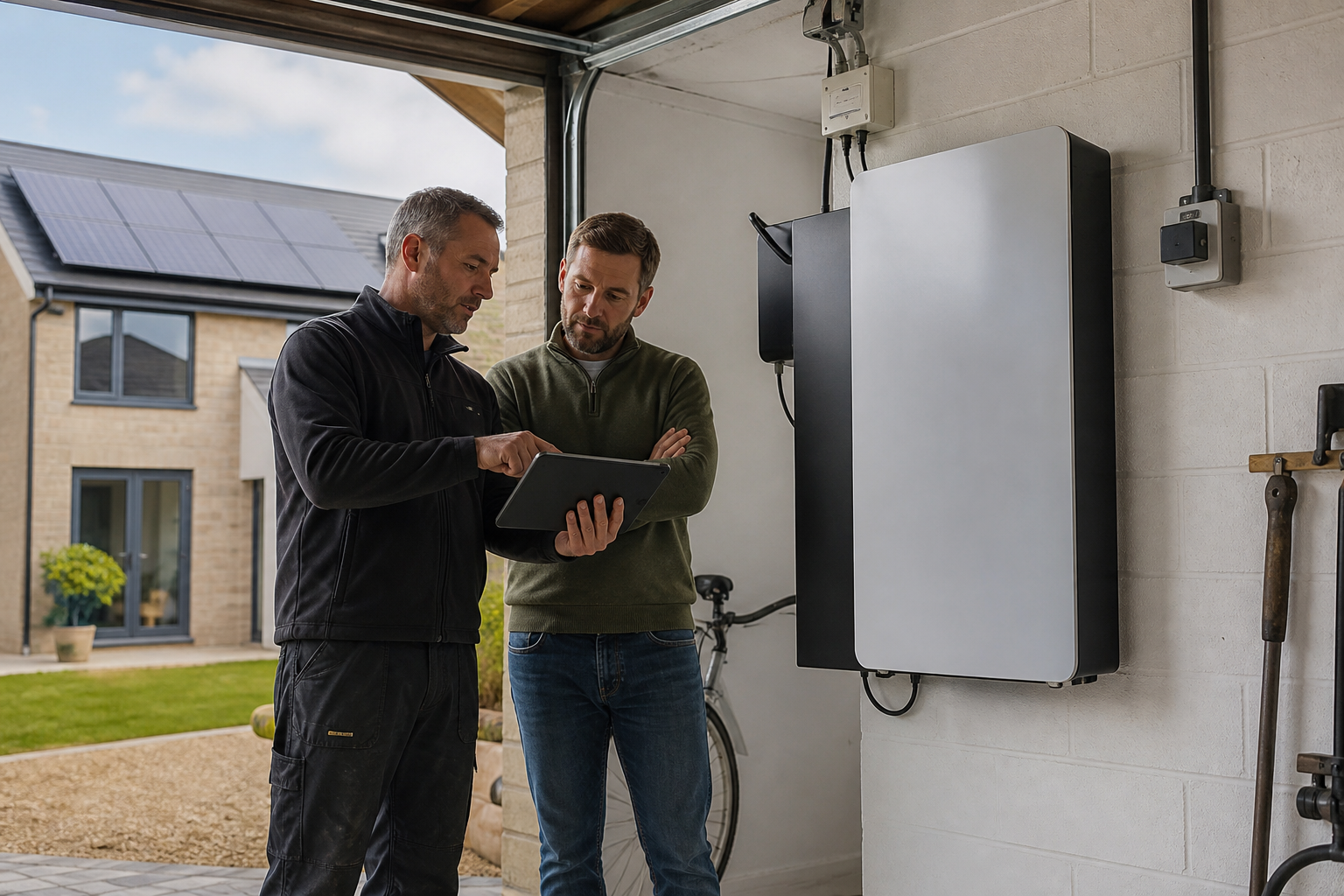
Battery storage is not essential for every site, but it can be a strong addition where the aim is to use more of your own generation or support charging demand outside peak solar hours. You can learn more about our solar battery storage systems if you are considering a more complete commercial setup.
4. How important is future-proofing?
One of the biggest mistakes in commercial energy projects is designing only for today's need. If you expect more EVs, more staff demand or operational growth, it often makes sense to build that into the design from the outset.
The role of battery storage in a combined system
Battery storage can help bridge the gap between when solar electricity is generated and when it is needed most.
For example, a business may generate strong solar output in the middle of the day, but see more vehicle charging later in the afternoon. In the right setup, battery storage can help shift some of that energy for later use rather than exporting it straight away.
It can also support overall energy management on sites where there are multiple demands on the electrical system at the same time.
For businesses exploring a broader renewable strategy, our commercial solar panels in Essex and storage solutions can be designed to work together as one coordinated system.
Common concerns from business owners
Will solar cover all EV charging?
Usually, the honest answer is that it depends on the site, the size of the solar array and how vehicles are charged. In many cases, solar will not cover every charging session at all times, but it can still play a valuable role in offsetting a meaningful portion of on-site demand.
What about cloudy days and winter?
Solar panels still generate electricity in daylight, although output varies with weather and season. That is why system design matters. A commercial installation should be based on realistic usage patterns rather than best-case assumptions.
Will installation disrupt business operations?
Every site is different, but commercial projects should be planned around access, safety and continuity. Our aim is always to design and install in a way that supports business operations, not works against them.
Is it better to install one system first and add the other later?
That can work, but many businesses benefit from assessing both together from the start. Even if the installation is phased, a joined-up design helps avoid unnecessary compromise later.
Why work with Ecowise Renewables Limited?
Businesses want clarity, competence and a partner who understands the practical side of project delivery. That is exactly how we approach commercial work.
We specialise in the design and installation of solar PV, battery storage and EV chargers.
We are based in Ingatestone, Essex and cover Essex and surrounding areas.
Our team brings over 15 years of renewable energy industry experience.
We hold recognised accreditations including MCS, HIES, TrustMark and NICEIC.
We work with both domestic and commercial clients and tailor every system to the property and the brief.
If you are comparing options, the difference is often in the detail. Good commercial design is about more than fitting panels or chargers. It is about understanding how the whole site works and delivering a system that makes sense operationally as well as technically.
You can explore more of our renewable energy services to see how we support businesses with joined-up energy solutions.
What to expect from a commercial site assessment
If you are considering a combined project, a proper assessment should come before any recommendation.
Initial discussion about your premises, vehicles and objectives
Review of site layout, roof space and parking areas
Assessment of electricity usage and charging demand
Consideration of battery storage where relevant
System design recommendations based on practicality and future plans
Installation planning with your operations in mind
This process helps identify whether commercial solar panels and workplace EV chargers should be installed together, phased over time or configured in a different way for the best result.
FAQs: commercial solar panels and EV chargers
Are commercial solar panels and workplace EV chargers only suitable for large businesses?
No. They can also suit smaller premises, provided the site has the right roof space, parking arrangement and electricity demand. The important point is proper assessment rather than business size alone.
Can you add EV chargers to an existing commercial solar installation?
Yes, in many cases that is possible. The best approach is to review the existing system, site demand and electrical setup so the new chargers integrate properly.
Do I need battery storage with commercial solar panels and EV chargers?
Not always. Some sites benefit from a simpler solar-and-charging setup, while others gain more flexibility from battery storage. The right answer depends on how and when the site uses energy.
Can commercial solar support a company EV fleet?
It can help support fleet charging by generating electricity on site during the day. The level of support depends on the size of the solar system, the charging pattern and the wider electricity demand of the premises.
Why choose a local Essex installer for a commercial renewable project?
A local partner can bring practical knowledge of the area, provide responsive support and make it easier to carry out site visits, design reviews and installation planning. From our Ingatestone base, we support businesses across Essex and nearby counties.
Plan both systems with one clear strategy
If your business is exploring solar, workplace charging or both, now is the time to assess them together. A combined approach can help you use your site more intelligently, prepare for growing EV demand and build a more resilient energy strategy.
At Ecowise Renewables Limited, we provide specialist design and installation for commercial solar panels, battery storage and EV chargers. If you are based in Essex and want a practical recommendation tailored to your premises, request a commercial site assessment and we will help you plan the right solution for your business.


Comments